Dogs and Puppies Central

Boxer Dog Breed Information

Your Online Guide to Facts About Boxer Dogs and Puppies

Boxer Dogs Info | Boxer Facts | Boxer Dog Breed History
Boxer Appearance | Boxer Grooming | Boxer Exercise Needs
Boxer Temperament | Boxer Training | Boxer Health
Is the Boxer Dog Breed Right For You? | Boxer Puppies For Sale
Boxer Prices | Boxer Breeders | Boxer Resources

 Boxer Dogs puppies

Boxer Dogs Information

Written by: Debbie Moore
Dogs Central copy is protected against web site content infringement by Copyscape
Copyright 1997 to 2010 Dogs and Puppies Central
All rights reserved.

Alternate Names: German Boxer

Common Misspellings: 

Learn all about Boxer Dogs and Puppies through our indepth guide to the Boxer dog breed. You'll find solid information about Boxer dog history, Boxer life expectancy Boxer dog appearance, Boxer temperament and personality, Boxer health problems, Boxer puppy care, training Boxer puppy dogs and more. Also includes important information about choosing a responsible Boxer dog breeder.

The Boxer is an energetic, fun loving dog whose ancestors are German mastiff-type dogs, the Bullenbeiszer and Barenbeiszer. The dogs were bred indiscriminately. Over time, the Bullenbeiszer became smaller and was called the Brabanter. These strong and agile dogs were used by the elite for hunting wild boar, deer and bear. The dogs’ ears were cropped to avoid being injured by the game animals. Their strong jaws enabled them to seize and hold the prey for the hunter, while his recessed nose allowed him to breathe.


In about 1830 the Brabanter was bred with the English Bulldog ancestor. These dogs were white in color and often used by cattle dealers to round up livestock. Because of their ability to learn tricks easily, and their clownish nature, they were also popular circus dogs.

By the early 1900’s the Boxer was well established in North America and was soon recognized by the American Kennel Club. Since that time, the handsome Boxer has grown steadily in popularity to become one of the most widely adopted pets in America.

Back to Menu

Boxer Facts

The Boxer Dog Breed In Brief

Country of Origin: Germany

Boxer Height: 22.5 - 25 inches (male)
21 - 23.5 (female)

Boxer Weight: 65 - 80 pounds (male)
50 - 64 pounds (female)

Boxer Color Variations: Fawn Boxer
Brindle Boxer
Both varieties may have white flashing and black mask.

Boxer Size Variations: All roughly mid-sized

Boxer Exercise Needs: Moderate

Boxer Grooming Demands: Minimal

Boxer Trainability: Moderate

Boxer Life Expectancy: 8 - 10 years

Average Boxer Prices: $750 to $2500, depending on Pedigree

Good With Children: Yes, with supervision.

Good With Other Pets: Yes

Breed Group: Sporting

Back to Menu

Boxer Dog History

The modern Boxer has evolved from two breeds of extinct European dogs. The larger Danziger Bullenbeiser and the Brabenter Bullenbeiser were both used as a hunting companions and assistants. These dogs were used to chase after prey, take them down and await the hunter’s arrival.

In the 1830’s the boxer was put to work in slaughterhouses as a cattle dog. Soon thereafter, The German Boxer Klub was formed in the 1860's and the breed subsequently flourished. Around the turn of the century, Boxers were introduced to the US and in 1904 the AKC breed standard was established.

The commonly held belief is that the English name "Boxer" was given to the breed because of their tendency to use their front paws when fighting or playing. There are other theories to explain the origin of the name. "Boxer" was a name commonly given to dogs and it may be that the breed name was taken from the first known of the species. Still another theory suggests that the name “Boxer” came from the German word "Boxl," which was his common name in the slaughterhouses of Germany.

Throughout the years, Boxers were often used for police work and it was believed that a darker color dog would be more difficult to see at night. During WWI they were used as military dogs and were utilized as pack dogs, attack dogs, guard dogs and messengers. Soldiers returning home from WWII brought Boxers with them and they quickly became popular family pets, show dogs and guard dogs.

Back to Menu

Boxer Dog Appearance

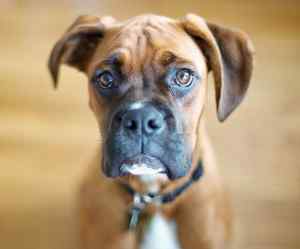
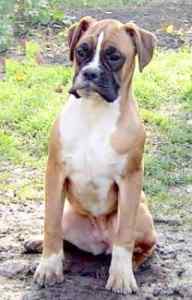
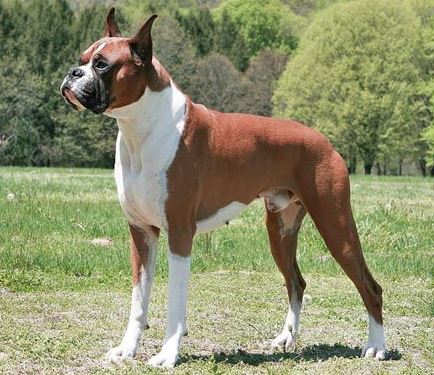
The Boxer has a powerful, well-muscled body with a shiny coat that snugly fits the body. The jaw is square-muzzled with a powerful bite; the lower jaw extends beyond the upper. The Boxer's hearing is keen making them excellent guard dogs. The coat of the Boxer is fawn or brindle with a white underbelly and white on the front feet or all four feet. "Flashy" Boxers have white fur reaching up to the neck or face. "Plain" Boxers have white fur on their toes or a small splash of white fur on the chest. Fawn covers a range of colors from yellow or beige to various shades of red. Brindle is a tiger-like stripe of black against a fawn background. Some brindle Boxers have more black than fawn in the stripes and are called "reverse brindle." So-called "white" boxers actually have a base coat of fawn or brindle with excessive white markings.

AKC standards do not allow for more than one-third of the Boxer’s coat to be white for show. White Boxers are not allowed in AKC show dog competitions but you will often find them in obedience and agility trials. Boxers do not carry a gene for solid black coat color and no purebred Boxer will be black. Boxers intended for the show ring were once required to have docked tail and ears, but in 2005 AKC standards changed to allow a description of undocked ears.

The first registered Boxer AKC championship was awarded in 1915. In 1949 Bang Away was awarded Best in Show at Westminster and went on to win 121 show awards in a six-year period. Bang Away became famous and appeared on the front of many popular magazines including Life and Esquire. The Boxer became very popular in the US due to his success and is still one of the ten most popular breeds of dog.

Back to Menu

Boxer Grooming

Grooming your Boxer is a breeze when compared to other mid-sized dogs. His very short coat means that a weekly brush is all your Boxer will need to keep his coat gleaming and chic. The Boxer will accept baths, but do be prepared for him to unexpectedly spring for freedom. It is wise to use cotton balls in his ears to prevent infection. Finally, there are dozens of doggie shampoos on the market, but be sure to select one with low fragrance and rinse carefully and thoroughly.

Back to Menu

Boxer Exercise Needs

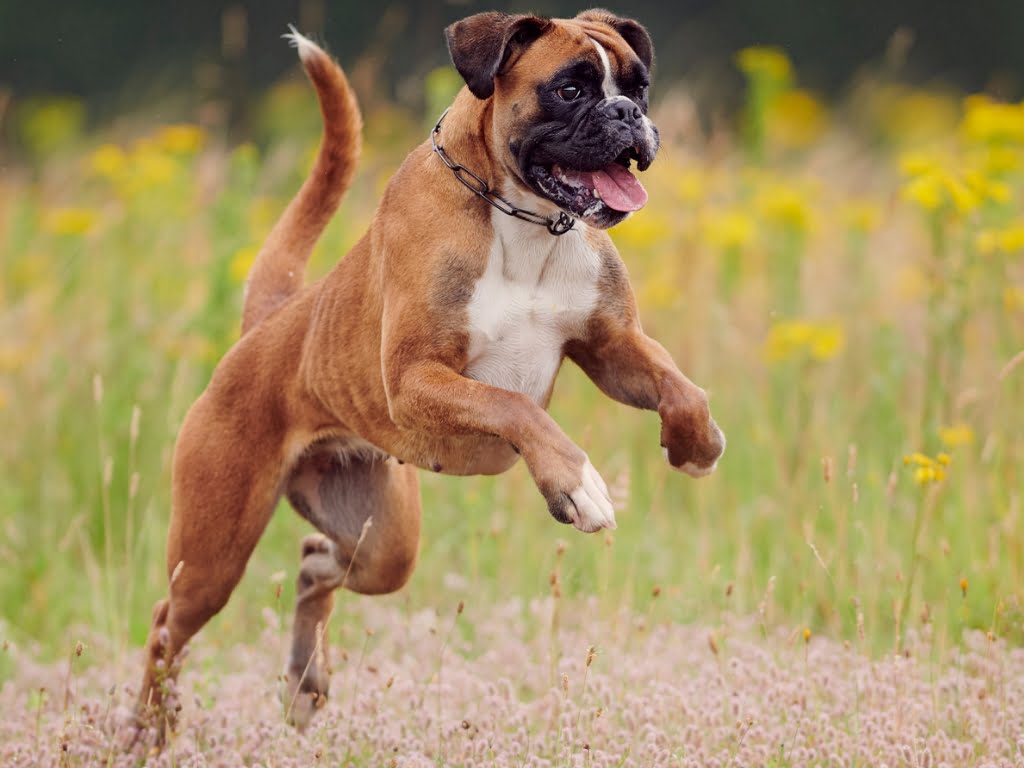
Boxers will adapt to almost any home environment as long as they have people around. Rambunctious indoors, they will do fine in an apartment but require lots of regular daily outdoor exercise or long brisk walks. A house with a mid-sized, fenced yard is best for your Boxer to romp. Being a working breed and Boxers need physical activity and mental stimulation to keep them occupied and out of mischief. Their short coats allow them to chill quickly and they should be indoor dogs. They do better in moderate climates and do not tolerate temperature extremes well.

Back to Menu

Boxer Temperament

Boxers once had a reputation for being aggressive, and were often used for dog fighting, but modern Boxers are affectionate, playful and loyal. Aggression is not acceptable in a Boxer, and dogs with this trait should not be bred. Boxers are highly intelligent and quick learners but they can be obstinate. Firm, consistent training from an early age by a dominant owner is vital with this breed. When properly socialized Boxers will get along with other household pets, although Boxers of the same sex in the same household tend to fight among themselves to display dominance. If the owner wants to have two Boxers in the family it is best to have one of each sex. Fond of children, Boxers are patient with their rowdy antics. They bond closely with their family and it is their nature to protect their family and home. Fearless, instinctive guard dogs, Boxers are wary of strange people and pets but will welcome known visitors with enthusiasm.

Back to Menu

Boxer Training

The Boxer can be a very easy individual to train, provided they believe that they need that training that you're trying to give them. Notoriously stubborn and keenly intelligent, these dogs seem to have a will of their own and react adversely to a strong hand. Persistence is essential when dealing with the Boxer (if you break routine and let him get away with something, rest assured that he will make the most of the opportunity). Positive reinforcement and regular routines are essential to the training of a Boxer dog and many owners report great success with clicker training these magnificent dogs.

Obedience training is essential for your Boxer, not only to teach him basic commands, but also to promote good socialization with other people and animals. Taking the time to teach your dog properly will not only make things easier for you, as his handler, but also easier for him as it will help him to better understand what, exactly, it is that you want. Boxers are, above all else, dogs that thrive on companionship and praise. Treat him well and there's nothing your Boxer puppy wouldn't do for you.

Boxer Health

The life expectancy of the Boxer is 11 to 14 years. The adult male will stand 22 to 25 inches and weigh 60 to 70 pounds. Females are slightly smaller. The main health concern with the breed is that they are more likely to get cancer than other breeds once they reach the age of eight years. Other major health concerns include sub-aortic stenosis, cardiomyopathy and hip dysplasia. They are also prone to epilepsy, allergies and skin conditions. They have a tendency toward sensitive stomachs and excessive flatulence and a proper diet is essential.

White Boxers tend to have more health problems than fawn or brindle Boxers and have a high tendency toward deafness. Many experts do not recommend breeding White Boxers with other Boxers of any color to avoid increasing the prevalence of hereditary defects within the gene pool. At one time many breeders would euthanize white puppies but now the common practice is to spay or neuter the puppy and place it with a family as a companion animal.

Back to Menu

Is the Boxer Right For You?

A dog lover who chooses a Boxer as a pet should consider the activity level and lifestyle of the family. Boxers will not do well in a family where they will be left alone all day while their people are at work. Training must begin at an early age to teach appropriate behavior. They need consistent physical and mental exercise to keep from becoming bored and destructive. If you are willing and able to give the Boxer the time he needs you will have a loyal, loving, lively and intelligent companion.

Back to Menu

Boxer Prices

Average Boxer Price: $750 - $1000

Price always varies when it comes to the purchase of a quality, home-raised healthy Boxer dog or puppy. It's of utmost importance that you place the most weight on acquiring a great Boxer puppy from a highly responsible, reputable breeder, and put the price as a secondary concern in making your decision.

Buying a Boxer dog or puppy at a cheap price from a breeder of questionable reputation can be a one-way ticket to heartbreak and great additional expense throughout the dog's life, should your Boxer puppy have hereditary health problems or behavior and temperament issues (which very often is the case with cheap-priced puppies). Buying from a highly reputable Boxer breeder is your best insurance for acquiring a well socialized, healthy puppy of stable temperament.

Boxer prices also will vary according to the puppy's conformation; puppies placed as pets and companions will generally be less expensive as show-quality Boxer puppies intended to be shown in conformation.

Back to Menu

 Boxer Dogs puppies

Finding Boxer Puppies For Sale By Reputable Breeders

If you are ready to add an adorable Boxer puppy to your family, be sure to check out Dogs and Puppies Central's directory of Boxer Puppies For Sale, where you will find photos and information posted by reputable Boxer breeders. We actively screen Boxer breeders who wish to advertise on our service by asking that they meet and follow our Guidelines For Responsible Dog Breeders. We also ask for - and check - three references from each breeder.

By performing an initial dog breeder screening, it is our hope that we can help put you in touch with a caring, responsible Boxer breeder near you. We cannot physically inspect the premises and dogs owned by breeders advertising with us, so you need to be responsible for doing the final inspection and interview.

Let's stop the cruelty of puppy mills. Please help us keep money out of the hands of puppy mills, back yard breeders and pet stores. Buy your Boxer puppy only from a responsible, caring hobby breeder that raises their dogs and puppies in a loving home environment.

When you locate that perfect Boxer puppy - please be sure to send us some photos to be included in our growing gallery of Boxer dog and puppy pictures!

Back to Menu

Additional Boxer Resources:

Back to Menu

shop online and save at dogs central
Buy Discount Boxer Dog Books, Boxer Supplies, Boxer Dog Breed Gifts, Boxer Dog Lover Gifts and more, right here on Boxer Dogs and Puppies Central!

Just click any item below to purchase online with fast and convenient home delivery.


FURminator deShedding Tool


Merial Frontline Plus Flea and Tick Control for Dogs and Puppies 
Merial Frontline Plus Flea and Tick Control for Dogs and Puppies


Angels' Eyes Tear-Stain Eliminator for Dogs, 240 Gram Bottle


Hide-A-Squirrel Large


Premier Spray Sense Anti Bark Collar 
Premier Spray Sense Anti Bark Collar


Drinkwell Platinum Pet Fountain


Drinkwell Platinum 6-Chamber Replacement Filters, 3-per Package


PetSafe Outdoor Ultrasonic Bark Deterrent 
PetSafe Outdoor Ultrasonic Bark Deterrent


Synovi G3 Soft Chews, 240 Count